
How to Load a Roll-Off Dumpster (and Avoid Extra Fees)
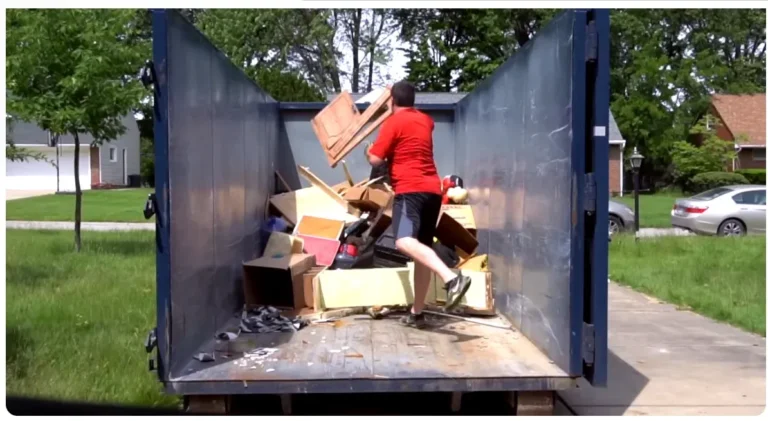
To load a roll-off dumpster the right way, lay flat, heavy items on the floor first, break everything down, fill the gaps as you go, and keep the load level with the top rail. If you have booked a dumpster rental in Asheville, loading this way also keeps you under the weight limit and away from the fees that come from overfilling or tossing banned items.
Most extra charges on a roll-off rental have nothing to do with the price you were quoted. They come from how the box gets loaded. A pile that sticks up over the walls, a couple of tires hidden in a back corner, or a floor covered in wet tile can turn a clean bill into a surprise. Planning on day one fixes most of it. Here is how to load a dumpster so it hauls away without trouble.
Where should the dumpster sit before you start loading?
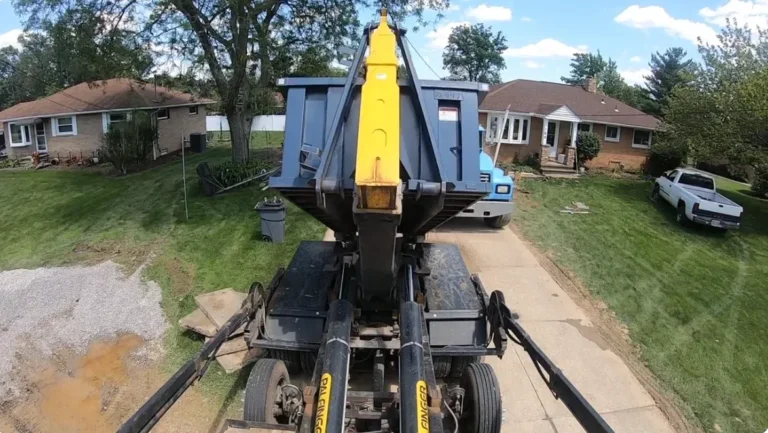
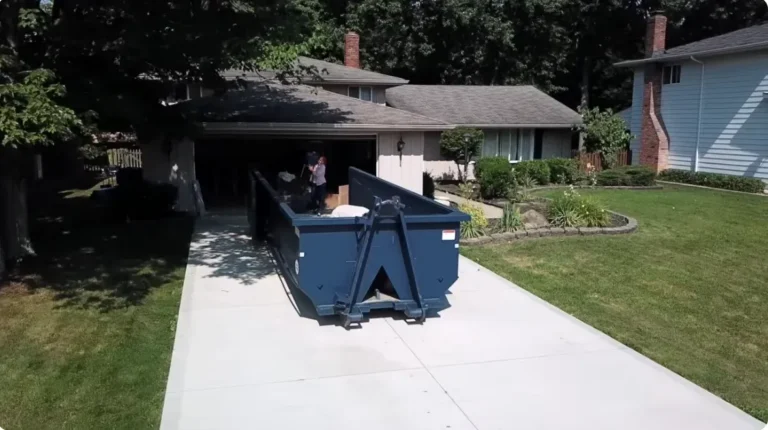
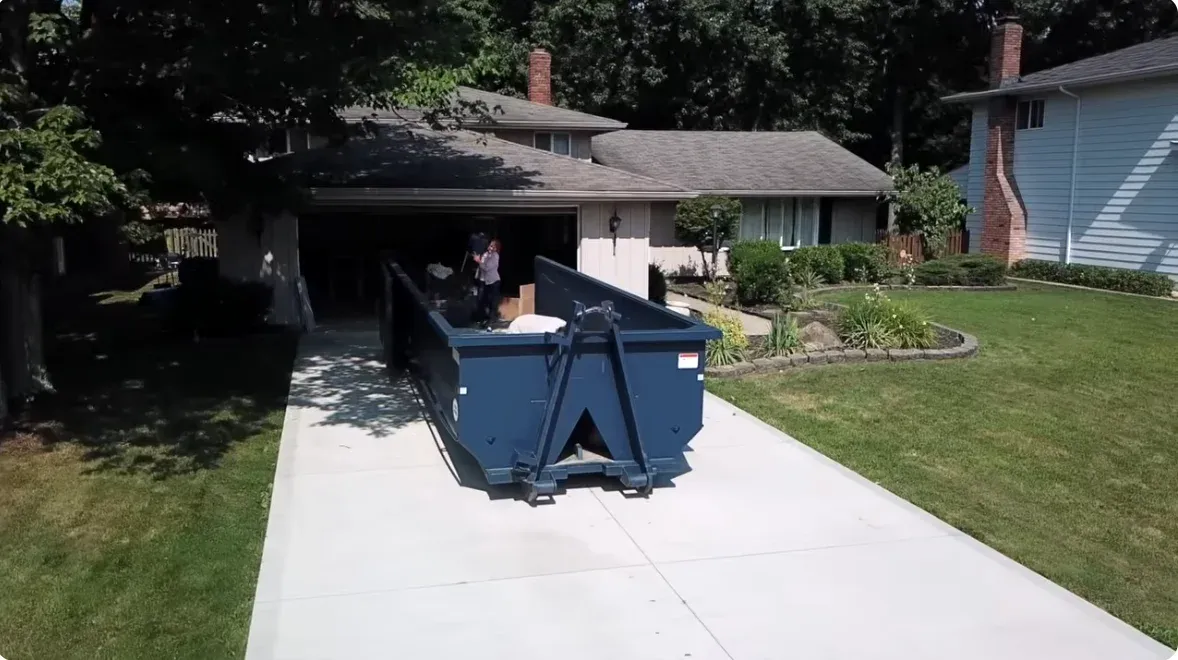
Good loading starts with good placement. The delivery truck needs about 60 feet of straight approach and roughly 23 feet of overhead clearance, so look up for low branches and power lines before delivery day. A paved driveway is the best spot, and we set boards under the rails to protect the surface.
Keep the box off your lawn. Asheville’s red clay softens after a rain, and a loaded container can sink in or leave deep ruts. Think about your walking path too. The shorter the trip from the work area to the dumpster door, the more likely everyone places debris carefully instead of heaving it over the side.
What goes in first when you load a dumpster?
Think of it like packing a moving truck. Order matters.
- Flat, heavy items on the floor. Plywood, old doors, drywall sheets and cabinet boxes laid flat make a solid base.
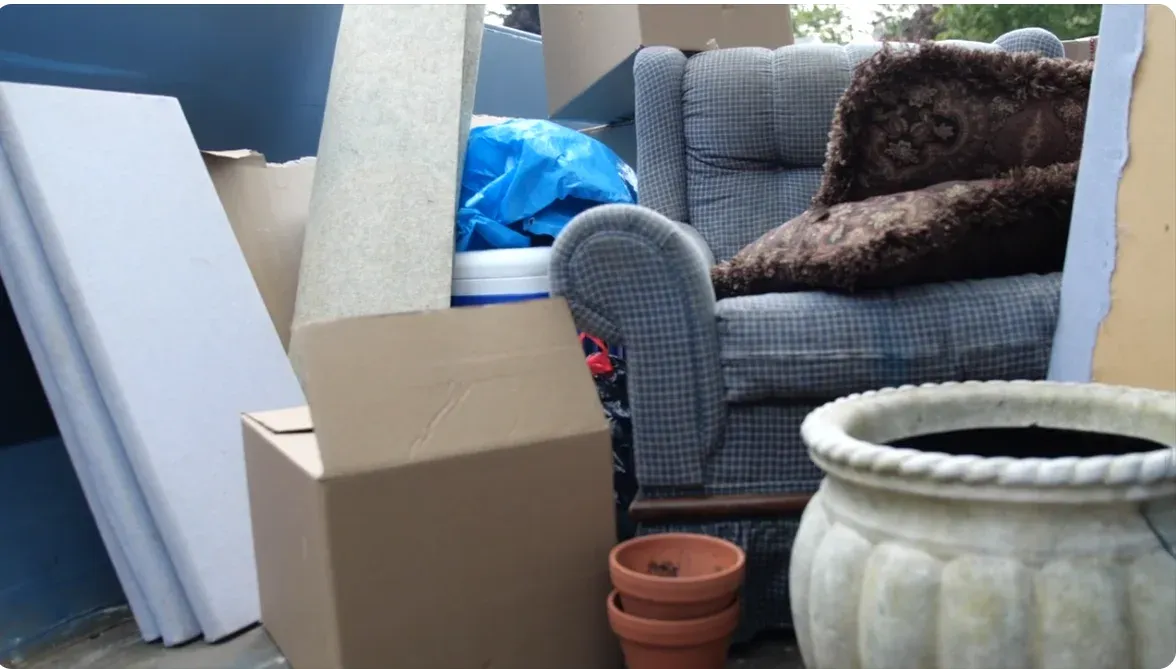
- Bulky items next. Furniture and large pieces go in after the base. Pull the legs off tables and remove cushions so pieces sit tight.
- Loose debris in the gaps. Bagged trash, scrap lumber and small pieces fill the holes between bigger items.
- Light, soft material on top. Flattened cardboard, insulation and packaging go last, pressed down by hand.
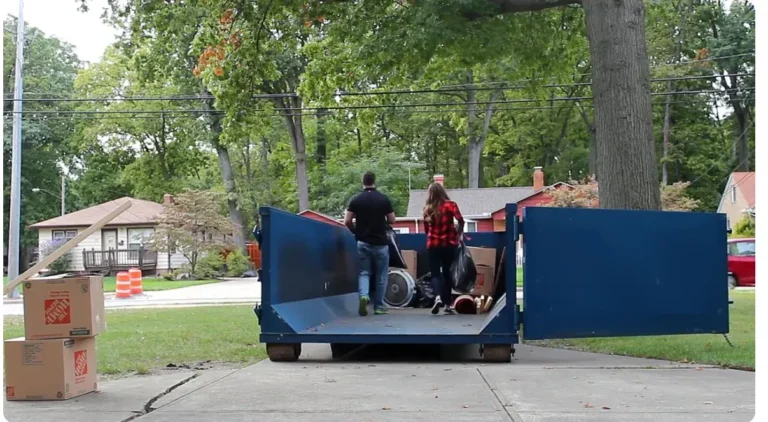
Use the rear swing door whenever you can. Walking a couch or dresser in through the door is easier on your back than lifting it over the wall, and it lets you push items tight against the front of the box where space is easiest to waste.
How do you fit more into a dumpster?
Empty air is what fills most dumpsters early. A box packed with whole boxes and assembled furniture runs out of room long before it reaches its weight allowance. A few habits make a real difference:
- Break every cardboard box down flat.
- Take apart bed frames, shelving and tables.
- Cut long lumber, trim and pipe into shorter pieces.
- Spread the load from front to back instead of piling it by the door.
- At the end of each work day, fill gaps before you start a new layer.
If you are still choosing a container, the dumpster size guide compares each box by how many pickup loads it holds. Picking the right size up front is the easiest way to avoid a second haul.
How full is too full?
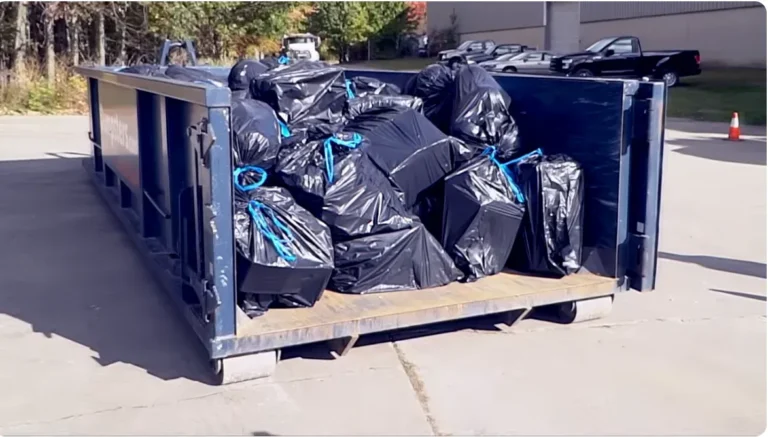
Keep debris level with or below the top rail. Nothing should poke above the walls or hang over the sides. The driver has to cover the load and carry it on public roads, so a box that is heaped up can’t leave until it is leveled out. That usually means a delay, a second visit or an added charge.
A good rule: if you can’t tarp it flat, it is too full. Pull the top layer back down into any low spots before you call for pickup.
What loading mistakes cause extra fees?
These are the problems we see most often, along with what they cost and how to avoid them.
| Mistake | What it costs | How to avoid it |
|---|---|---|
| Going over the weight limit | Usually about $75–$100 per ton, based on the landfill scale ticket | Know your included tons and spread heavy debris across the project |
| Loading banned items | Items get pulled out or charged separately | Check the banned list before anything goes in |
| Heaping above the rail | Delay or added trip until the load is leveled | Keep the top flat and below the walls |
| Mixing concrete with trash | The whole load is billed as trash instead of recycled | Keep clean concrete, brick and block in their own load |
| Keeping the box past 7 days | Extra days run about $15–$25 per day | Schedule pickup as soon as the work wraps up |
Heavy debris deserves special care. Roofing is a good example, since asphalt shingles run about 250–400 pounds per square. Wet material weighs more than dry, so cover the box if rain is coming. If your project includes a slab or old patio, a separate concrete dumpster keeps that clean load out of the trash rate.
What should never go in the dumpster?
Some items can’t go to the landfill at all, and they are a common source of fees. Leave these out:
- Liquid paint, solvents and other chemicals
- Fuels and propane tanks
- Batteries
- Refrigerators, freezers and AC units that hold refrigerant
- TVs and computers, since North Carolina bans electronics from landfills
- Asbestos and medical waste
Tires carry a separate fee, and mattresses are charged per item. Yard waste and dirt are possible, but ask before you load them. The full rundown is on our page about what can’t go in a dumpster in Asheville.
Frequently asked questions
What should go in a dumpster first?
Start with flat, heavy items like plywood, doors and drywall on the floor. Bulky items go in next, then loose debris fills the gaps.
Can I fill a dumpster above the top?
No. Debris should stay level with or below the top rail so the driver can cover the load and haul it safely.
Do I have to pay if I go over the weight limit?
Yes. Overweight is usually about $75–$100 per ton, based on the landfill scale ticket. See our prices page for included weights.
Can I put concrete in with my regular debris?
You can, but mixed loads are billed as trash. Clean concrete, brick and block loaded on their own can be recycled at the landfill.
Is it okay to put the dumpster on my lawn?
We don’t recommend it. Asheville’s red clay softens after rain, so a paved driveway with boards under the rails is the better spot.
Loading a dumpster well comes down to four things: a flat base, no wasted space, a level top and nothing from the banned list. Every quote we give includes delivery, 7 days, pickup and disposal up to the weight limit, with no fuel or environmental fees added on. Get a free quote for your project, or compare dumpster prices in Asheville first.