
Dumpster Weight Limits and Overage Fees Explained
Every roll-off dumpster comes with an included weight, usually about 2 tons for a 10-yard up to about 6 tons for a 30-yard. With a dumpster rental in Asheville, anything over that limit is typically billed at about $75–$100 per ton, based on the scale ticket from the landfill.
Weight limits confuse a lot of first-time renters. A dumpster looks like it’s all about space, and most people pick a size by eyeballing their pile. But the landfill charges by the ton, so the hauler does too. A box can be half full and still be overweight if it’s packed with shingles or tile. Here’s how dumpster weight limits work, what overage fees look like and how to stay under the line.
What is a dumpster weight limit?
The weight limit is the amount of debris included in your rental price. When we pick up your full dumpster, it goes to the Buncombe County Landfill on Panther Branch Road in Alexander, where the truck crosses a scale. The landfill prints a ticket showing the exact weight of your load. If that number is at or under your included tons, you owe nothing more. If it’s over, the difference is billed per ton.
That scale ticket is the only number that counts. No one guesses at your weight, and you can ask to see the ticket if you’re charged an overage.
How much weight does each dumpster size include?
Here are typical Asheville prices and included weights for a 7-day rental. Prices vary by hauler, and we give all-in quotes so you know the number up front.
| Size | Typical 7-day price | Included weight | Holds about |
|---|---|---|---|
| 10-yard | $245–$400 | ~2 tons | 3 pickup loads |
| 15-yard | $295–$340 | ~3 tons | 4–5 pickup loads |
| 20-yard | $395–$575 | ~4 tons | 6 pickup loads |
| 30-yard | $495–$800+ | ~6 tons | 9 pickup loads |
The bigger the box, the more weight comes with it. Our 20-yard dumpster is the most common pick for mid-size remodels because it balances room and included tons.
How are overage fees calculated?
The math is simple. Take the landfill weight, subtract your included weight and multiply what’s left by the per-ton rate. Overweight usually runs about $75–$100 per ton.
Say you rent a 20-yard with about 4 tons included, and the scale ticket shows 5 tons. You’re 1 ton over, so the overage would land around $75–$100. That’s not a disaster, but it adds up fast on heavy jobs. Going 3 tons over on the same box would mean roughly $225–$300 on top of your rental.
We don’t add fuel surcharges or environmental fees, so the overage is the only weight-related charge you’d see.
Which materials push a dumpster over the limit?
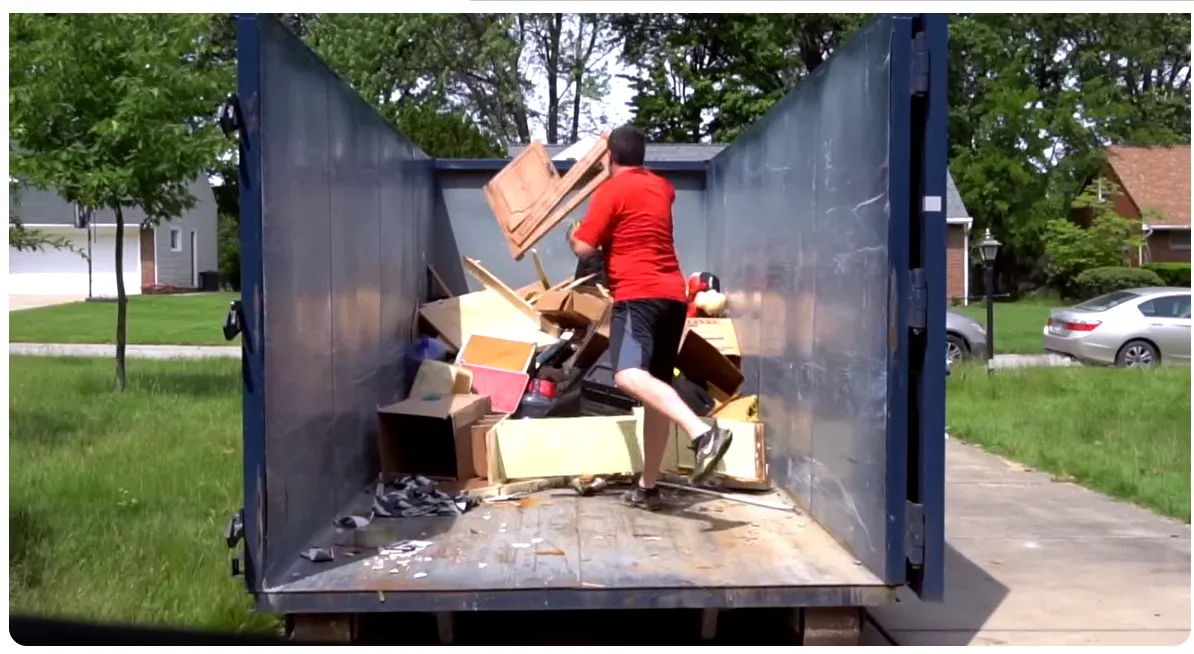
Volume and weight aren’t the same thing. A box full of old furniture and cardboard rarely gets close to its limit. A box full of these materials can blow past it:
- Roofing shingles. Asphalt shingles run about 250–400 pounds per square (100 square feet). A 30-square roof works out to roughly 3.75–6 tons of shingles alone.
- Concrete, brick and block. These are dense and fill weight long before they fill space.
- Dirt and rock. Very heavy for their size. Ask first before loading soil.
- Tile, plaster and wet drywall. Bathroom and kitchen demo gets heavy quickly.
- Anything soaked by rain. Water adds weight, so cover the box when storms roll through.
For tear-offs, our roofing dumpster page helps you match the box to the number of squares on your roof.
How do you avoid overage fees?
A few habits keep most renters under the limit:
- Tell us what you’re throwing away. Heavy debris changes which size makes sense, so be specific when you ask for a quote.
- Keep concrete separate. Clean concrete, brick and block loads can be recycled at the landfill. Mixed with trash, they’re billed as trash. A dedicated concrete dumpster is often the cheaper route.
- Split heavy jobs. Contractors can use swap-outs, where we pull the full box and drop an empty one on the same trip. Two lighter loads can cost less than one overloaded box.
- Don’t fill to the top with heavy debris. A box loaded to the rail with shingles or tile will almost always be over.
- Cover the dumpster before rain. Dry debris weighs less than wet debris.
Is it ever fine to go over?
Sometimes, yes. If you’re only slightly over, paying a small overage can cost less than renting a second box or upsizing. The goal isn’t to fear the limit. It’s to know roughly where you’ll land so the final bill makes sense. If you’re unsure, describe your project when you call and we’ll help you estimate.
Frequently asked questions
How much weight can a 20-yard dumpster hold?
A 20-yard dumpster in Asheville typically includes about 4 tons. Weight over that is billed per ton from the landfill scale ticket.
How much are dumpster overage fees?
Overweight usually costs about $75–$100 per ton. There are no fuel or environmental fees added on top.
How do you know how much my dumpster weighed?
The full dumpster is weighed on the scale at the Buncombe County Landfill in Alexander. The scale ticket shows the exact weight.
What materials are heaviest in a dumpster?
Shingles, concrete, brick, dirt, tile and wet drywall are the most common reasons for overweight loads. Shingles alone run about 250–400 pounds per square.
How can I avoid going over the weight limit?
Pick a size based on your heaviest debris, keep clean concrete in a separate load and cover the box before rain. Check sizes in our size guide.
Dumpster weight limits come down to the scale ticket, your included tons and how dense your debris is. Plan for heavy materials, keep clean concrete separate and pick a size with enough room and weight for the job. Get a free quote with the included tons spelled out, or see every size on our dumpster prices page.